Epoxy is an ideal material for many uses owing to its hardness, strength and durability. Most epoxy materials are 2-part systems that react to form a hard plastic meant for harsh conditions. 1-part epoxy is a newer tech that requires no measuring or mixing, limiting the chance of user error.
Cured epoxy is a tough material that sticks to a variety of substrates and has a hard, durable finish. Because of its adhesion, water resistance and high strength, epoxy systems find use for potting electronics and adhesives. A key feature with epoxy is how embedded it becomes on surfaces once cured, making it hard to remove. This feature helps hide intellectual property (IP), making epoxy a go-to resin system for protection.
The toughness and adhesion of epoxy are great qualities for hiding IP. This feature; however, can be a snag when the epoxy needs removal to correct mistakes. Removing uncured epoxy is easy to do using solvents but cured material is a different story. This article outlines techniques used to remove hardened epoxy once it has cured.
Cured epoxy is hard to remove from a surface. Though the below tips may prove valid, they are not a guarantee. The user also needs to know that removing cured epoxy by chemical means will target other plastics as well. Removal may require multiple techniques to achieve best results.
Remove Cured Epoxy by Physical Means
Physical means is likely the most localized approach a user can employ when trying to remove cured epoxy resin. With physical means, the user directs efforts towards the epoxy surface without trying to harm the substrate. Techniques include sanding and chipping/cracking away at the epoxy to remove the outer surface. While this technique is best to not harm substrates like metal and concrete, it is unlikely to remove all cured epoxy.
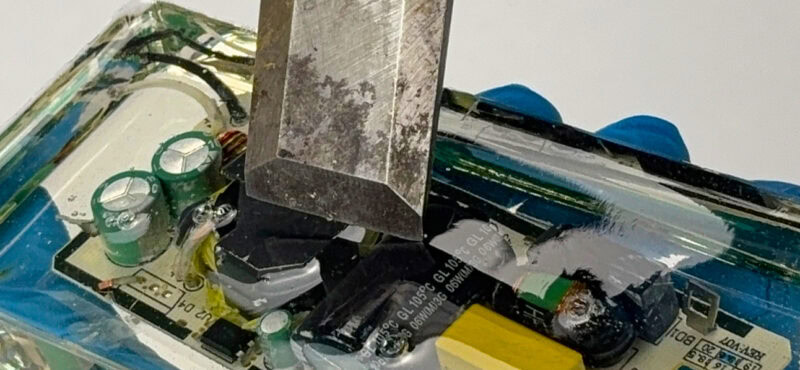
Figure 1: Illustration showing mechanical removal of cured epoxy with a chiselled edge
Remove Cured Epoxy with Heat
Heat is another tool to remove cured epoxy. With this approach, users heat the cured epoxy above its glass transition temperature (Tg) and hold it there. While still hot, the user removes the epoxy using tools like those listed above. This approach is most suited for removing bond joints adhered with epoxy adhesive.
The basis for this technique lies in how the cured polymer softens above the Tg. Below the Tg, the epoxy remains rigid, tough and well adhered to the surface. Above the Tg, the epoxy becomes softer with less adhesion and therefore becomes easier to remove.
MG Chemicals suggests going as far beyond the Tg as you can for easier removal. The higher the temperature, the softer and more pliable the epoxy becomes. The heat sensitivity of the part typically determines this max. temperature.
Remove Cured Epoxy by Chemical Means
As stated earlier, users must take care that chemicals used for epoxy removal don’t attack other plastics. Simply put, if the chemical can break down epoxy, it can break down most other plastics. Mild solvents like isopropyl alcohol or common paint thinners are not good at breaking down epoxy. Organic solvents like acetone and methylene chloride are popular choices as they will soften many plastics over time.
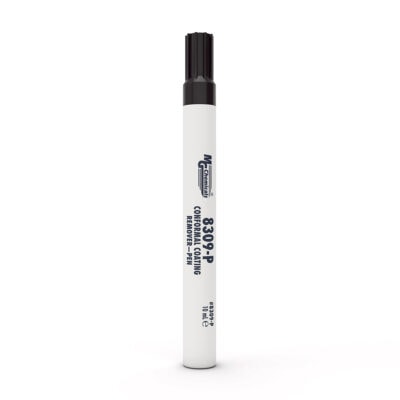
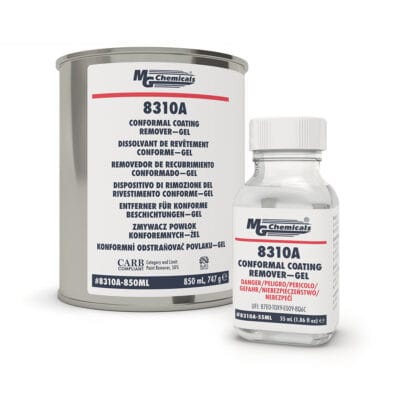
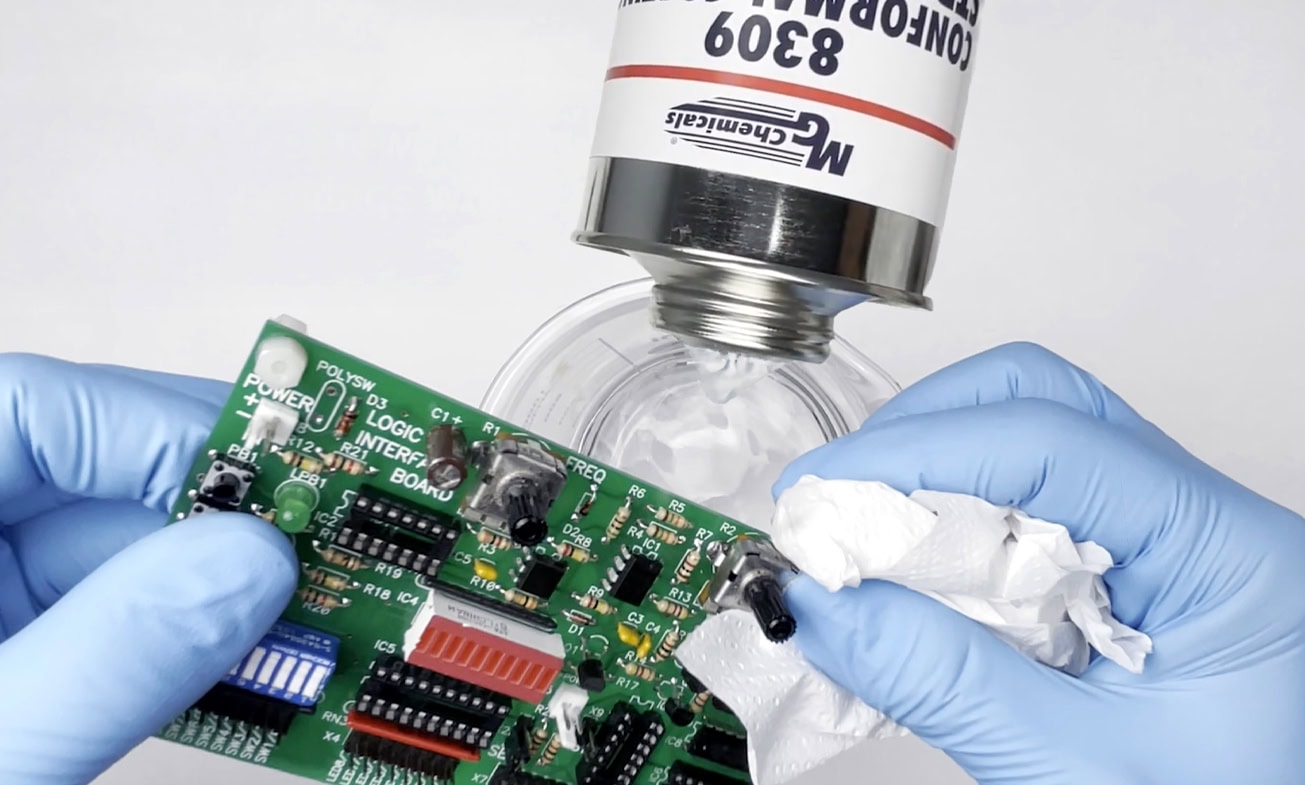
Products like 8309 and 8310A conformal coating stripper also work on epoxy and give users the choice between a liquid or gel. The amount of time needed to soften the epoxy varies, depending on the resin and hardener system. High grade, dual component epoxy with low filler has higher chemical resistance and requires more soaking time. Lower grade epoxy with high filler tend to soften more quickly.
For example, our 832HT epoxy is a clean resin system with no filler. The resin uses Novalac that forms tight bonds for improved chemical resistance. The 832HT survives tough conditions and ensures long-term reliability. Removing 832HT epoxy would take several hours of solvent soak to soften the plastic.
By comparison, our conductive adhesives contain between 60 and 70% filler which lowers crosslink density. The use of these products is largely conductivity and not their strength. Our 8331D is a 2-part adhesive and has less chemical resistance; therefore, it would not require as much time to remove.
The basis for the above-mentioned chemical removal method is the complete submersion of the epoxy in the liquid. These chemicals are highly volatile so simple application is not sufficient. Instead, exposure must be continuous, often for several hours to be effective. Soaking the epoxy in chemical should happen in a well-ventilated space with protective equipment worn.
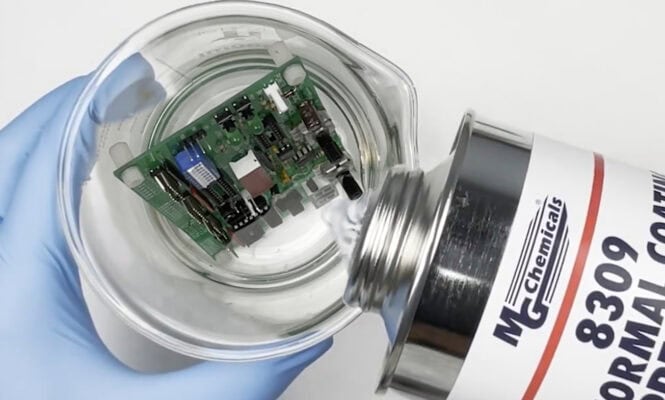
Figure 2: Cured epoxy removal using chemical means like the 8309
Whichever method taken to remove the cured epoxy, the user should have realistic expectations of what to expect. If the goal is simply to remove some epoxy from a metallic surface, it’s reasonable to expect complete removal. If, however, you have a potted PCB, the chances of removing the entire epoxy cleanly is low. Users must decide if attempting to remove epoxy is worth the risk of permanently damaging delicate components.