Product Categories
New Product
Epoxy Potting Compounds
Featured Product
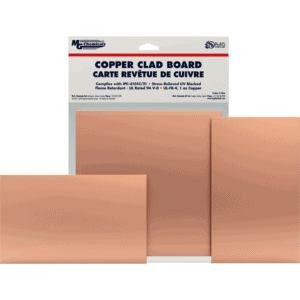
Copper Clad Boards
Epoxy Potting Compounds
Copper Clad Boards

At MG Chemicals, we’re committed to driving innovation and empowering the next generation of scientific pioneers. Our University Project Sponsorship opportunities are tailored to fuel creativity, collaboration, and groundbreaking discoveries within the academic sphere. If you’re a university educator, researcher, or student looking to transcend the boundaries of chemistry and technology, we invite you to explore the endless possibilities with MG Chemicals.
Learn More




Showing all 2 results
Home > Products > Conformal Coatings > Acrylic Conformal Coatings
MG Chemicals offers a comprehensive range of acrylic conformal coating products designed to protect printed circuit boards (PCBs) from moisture, humidity, dust, fungus, and high voltage arcing. These 1-part coatings are considered to be one of the best ways to protect PCBs from humidity, moisture, and common contaminants.
They are certified to UL94 V-0, UL746E, and IPC-CC-830 standards. All coatings are available in both liquid and aerosol spray formats, and include recommended dilutions for compatibility with selective coating equipment.
We also offer silicone, epoxy, polyurethane, and uv conformal coatings.
419D – Acrylic Conformal Coating – Fast drying IPC-CC-830B and UL94 V-0 certified acrylic conformal coating that is designed to protect printed circuit boards from moisture, corrosive environments, and dirt. It can be easily reworked, and is suitable for use with selective coating equipment, as well as for manual spraying and other traditional application methods.
419E – Premium Acrylic Conformal Coating – A UL 746E and IPC-CC-830C Certified PCB conformal coating. This coating offers ultimate environmental protection to printed circuit boards. It can be easily reworked and is suitable for use with selective coating equipment, as well as for manual spraying and other traditional application methods.
Acrylic conformal coatings are easy-to-use, 1-part coatings that cure by physical drying. These coatings impart excellent dielectric properties and protect against moisture, dust and fungus.
Acrylic conformal coatings provide circuits with excellent protection against moisture, dust and fungus. Their main advantages over other conformal coating chemistries are their cost, ease-of-use, and ability to be reworked.
The biggest shortcoming of acrylic conformal coatings is their lack of chemical resistance. While they excel in protecting against moisture, dust and fungus in relatively mild environments, they lack the crosslink density required to shield against more aggressive chemicals, such as fuel vapors. To ensure that you have the right conformal coating solution, it is important that you know all of your application’s requirements. If you are uncertain, please contact MG chemicals technical support for assistance ([email protected]).
Acrylics are thermoplastic resins, which means that while they have many strengths as protective coatings, they do not hold up well against solvents. But for that same reason, acrylic conformal coatings can be removed simply by using common solvents like acetone or n-butyl acetate.
Polyurethanes are excellent coating materials as they are highly flexible, provide great protection against moisture, and have excellent dielectric properties. Compared to acrylics, polyurethanes provide superior protection from abrasion and solvents; however, processing must be carefully considered because they take considerably longer to cure. If you need help, please contact MG Chemicals technical support. ([email protected])
Silicones make great conformal materials thanks to their superior moisture protection, low modulus and extended temperature limits, giving them an advantage over every other conformal coating resin type. That being said, they are not ideal materials for high humidity environments, and compared to acrylics they struggle to adhere to certain substrates. As with every application, carefully consider all of your requirements, and contact MG Chemicals technical support if assistance is needed. ([email protected])
Epoxies are exceptionally durable due to their hardness and solvent resistance. Compared to other materials, epoxies can withstand particularly harsh environments and are thus suitable for ruggedizing PCBs in places like oil fields, on marine freighters, or under engine hoods. That being said, processing epoxies can be cumbersome, as they require measuring, mixing, and careful monitoring of their pot life. By contrast, simple 1-part acrylic systems that require only thinning can be more robust. Carefully consider all of your requirements when choosing the right conformal coating for your application, and contact MG Chemicals technical support if you need any further assistance. ([email protected])